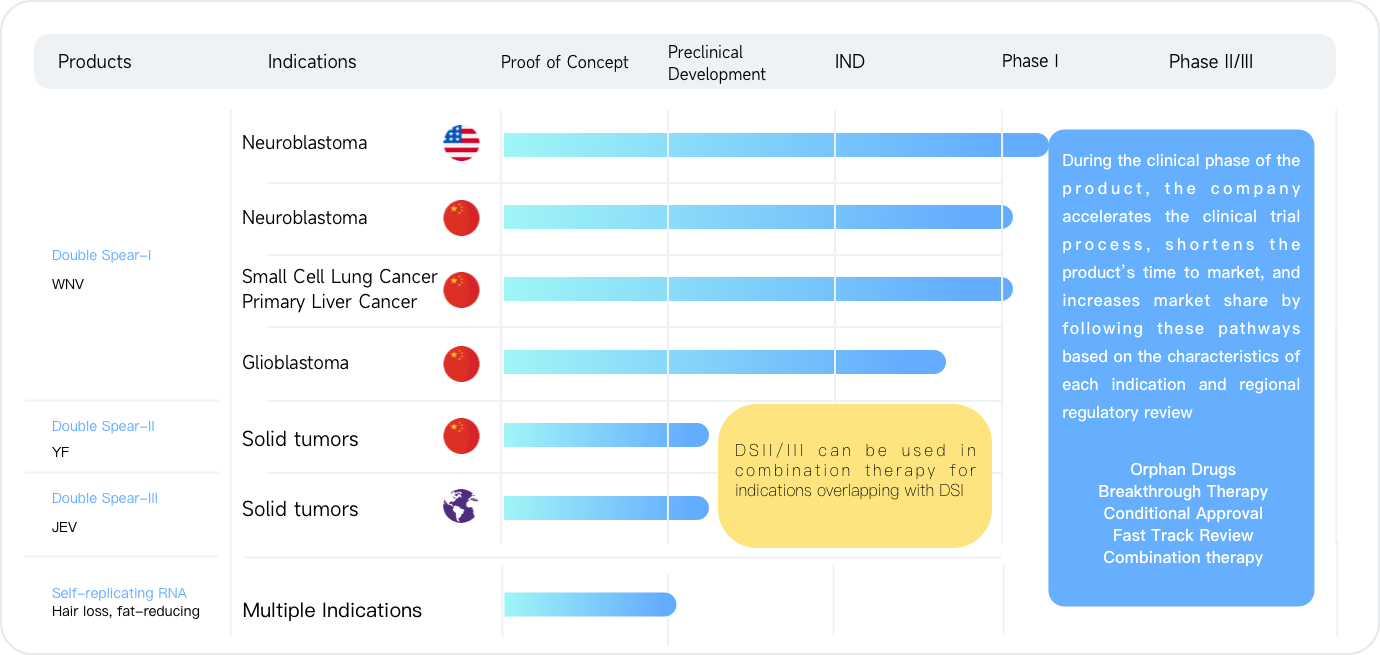
DS1-H2-1 is an oncolytic flavivirus composed of West Nile virus (WNV) and a human T cell co-stimulatory gene.
01
Source of the Original Strain of the Virus
Chemically synthesis the genes of B956 strain of WNV with the exogenous factor gene constructed in plasmid vector for production.
02
Mechanism of Antitumor Treatments
1.Tumor lysis by oncolytic virus and fully expose various antigens of tumor tissues to activate the immune system;2.Oncolytic virus vectors are expressed in tumors to produce T cell activation factors;3.Dual signals (exposed antigens + co-stimulator) activate specific recognition, attach and removal of cancer cells by T cells in the tumor microenvironments.
03
Co-Stimulator: CD86
The human CD86 gene fragment is inserted between the WNV envelope (E) gene and the non-structural (NS) s gene, which is used in active immunotherapy.
04
Tissue Specificity
Different serotypes of the oncolytic viruses have different tissue tropics and pathogenicity. The product uses its neurotropic characteristics to infect nerve tumor cells and is preferred for treating nerve tumors.
05
Viral Half-life
The product replicates in tumor cells and is a self-limiting process with a metabolic half-life of approximately four days. CD86 can only be produced due to the expression of viral replications.
06
Attenuated WNV
The Product is a genetically modified neurotropic WNV. It does not infect the central nerve system through the blood-brain barrier, and toxicology studies have proved that the product has no risk of pathogenicity.
Innovative Highlights of DS1-H2-1
West Nile Virus (WNV) belongs to the flavivirus family, a positive-single-stranded RNA virus, a new member in the oncolytic virus products.
WNV holds natural neurotropic properties, and has a remarkable therapeutic effect on neurological tumors, as well as unique effect on other solid tumors.
The Genetically modified WNV reduces neurovirulence. In turn, it has high clinical safety, no systemic toxicity, and cannot cross the blood-brain barrier to invade the central nervous system. In sum, the DS1-H2-1 has fewer side effects than most chemical drugs.
The product successfully embedded CD86, a key factor of T cell immune activation, allowing it to be used as a viral vector for oncolytic-active immunotherapy dual therapy. The systemic immune response to tumor specificity can be achieved in treating conventional treatment failure, recurrence, metastasis, and multiple cancers.

West Nile Virus (WNV)

neurological tumors

Reduces Neurovirulence

Dual Therapy
West Nile Virus (WNV)
West Nile Virus (WNV) belongs to the flavivirus family, a positive-single-stranded RNA virus, a new member in the oncolytic virus products.
neurological tumors
WNV holds natural neurotropic properties, and has a remarkable therapeutic effect on neurological tumors, as well as unique effect on other solid tumors.
Reduces Neurovirulence
The Genetically modified WNV reduces neurovirulence. In turn, it has high clinical safety, no systemic toxicity, and cannot cross the blood-brain barrier to invade the central nervous system. In sum, the DS1-H2-1 has fewer side effects than most chemical drugs.
Dual Therapy
The product successfully embedded CD86, a key factor of T cell immune activation, allowing it to be used as a viral vector for oncolytic-active immunotherapy dual therapy. The systemic immune response to tumor specificity can be achieved in treating conventional treatment failure, recurrence, metastasis, and multiple cancers.
a
n
c
o
c
a
r
e

